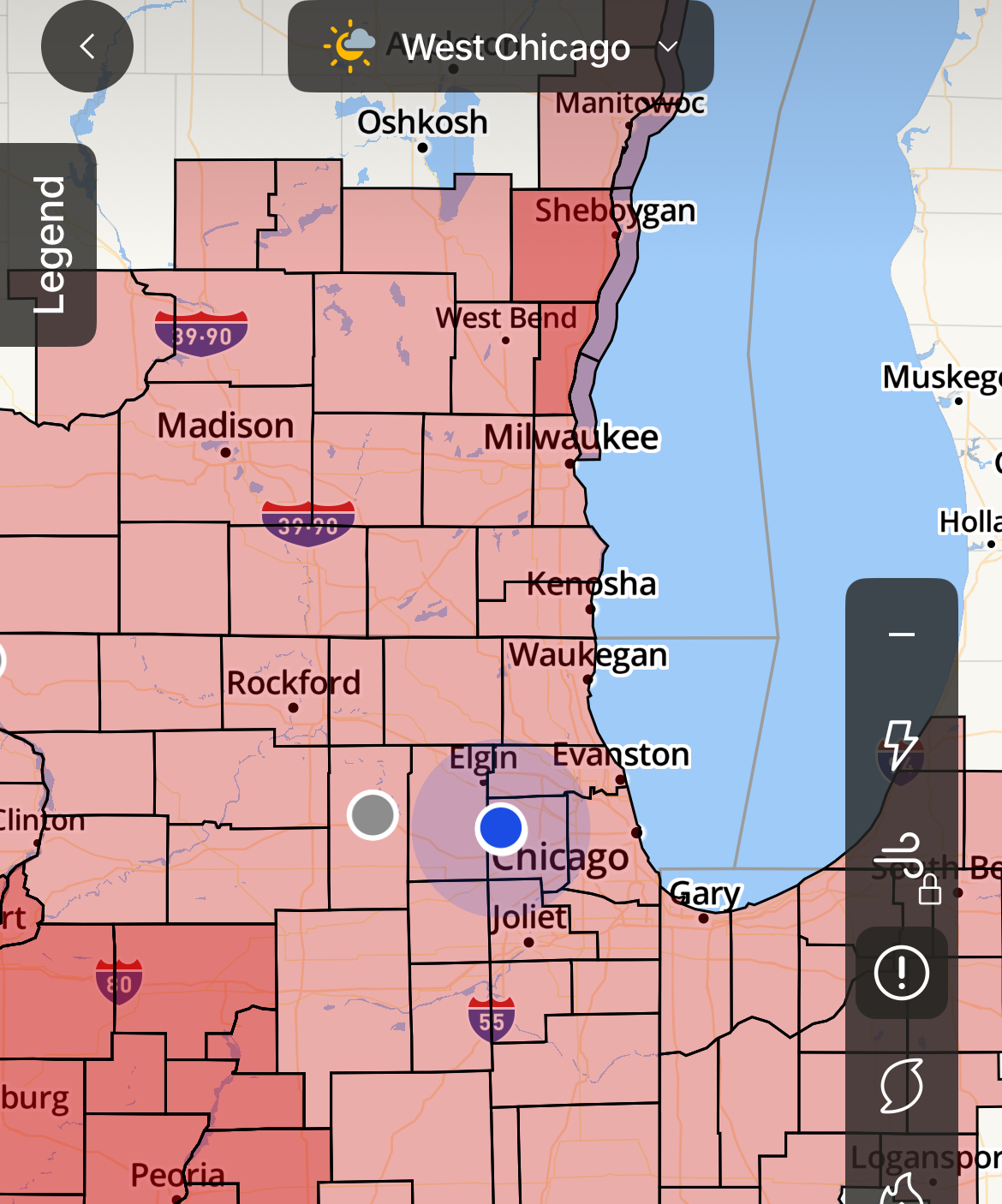
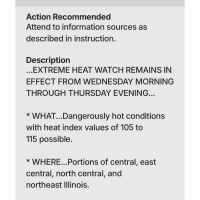
 West Chicago, IL — Residents across northern Illinois, including West Chicago, are being urged to prepare for dangerously high temperatures as the National Weather Service has issued an Extreme Heat Watch in effect from 10 a.m. Wednesday through 10 p.m. Thursday.
The alert, issued early Tuesday morning, warns of potentially life-threatening heat index values ranging from 105 to 115 degrees Fahrenheit. The heat watch spans a large portion of the state, including central, east central, north central, and northeast Illinois. West Chicago and much of the surrounding Chicagoland area fall squarely within the warning zone.
According to the advisory, the intense heat and humidity could significantly increase the risk of heat-related illnesses, especially for vulnerable populations such as young children, the elderly, individuals with chronic conditions, and those without access to air conditioning.
Local officials and weather experts are urging residents to take the alert seriously. “This level of heat can be extremely dangerous,” said a spokesperson from the National Weather Service. “Residents should avoid outdoor activities during peak heat hours, stay hydrated, and check in on neighbors, especially those who may be at higher risk.”
Tips for staying safe during extreme heat:
• Stay indoors during the hottest parts of the day.
• Use air conditioning if available, or seek out cooling centers.
• Drink plenty of water and avoid sugary or alcoholic beverages.
• Never leave children or pets in parked vehicles.
Residents are advised to watch for additional updates and to follow local weather stations or the Weather Channel app for real-time alerts.
The Extreme Heat Watch serves as a proactive warning, giving residents time to prepare ahead of what could be one of the hottest stretches of the summer.
West Chicago, IL — Se insta a los residentes del norte de Illinois, incluido West Chicago, a prepararse para temperaturas peligrosamente altas, ya que el Servicio Meteorológico Nacional ha emitido una Vigilancia de Calor Extremo vigente desde las 10 a.m. del miércoles hasta las 10 p.m. del jueves.
La alerta, emitida temprano el martes por la mañana, advierte sobre valores de índice de calor potencialmente mortales, que podrían oscilar entre los 105 y 115 grados Fahrenheit. La vigilancia de calor abarca una gran parte del estado, incluyendo las regiones central, este central, norte central y noreste de Illinois. West Chicago y gran parte del área metropolitana de Chicago se encuentran dentro de la zona de advertencia.
Según el aviso, el calor y la humedad intensos podrían aumentar significativamente el riesgo de enfermedades relacionadas con el calor, especialmente para poblaciones vulnerables como niños pequeños, personas mayores, personas con condiciones crónicas y quienes no tienen acceso a aire acondicionado.
Funcionarios locales y expertos en meteorología instan a los residentes a tomar la alerta en serio. “Este nivel de calor puede ser extremadamente peligroso,” dijo un portavoz del Servicio Meteorológico Nacional. “Los residentes deben evitar actividades al aire libre durante las horas de mayor calor, mantenerse hidratados y estar atentos a sus vecinos, especialmente aquellos que puedan estar en mayor riesgo.”
Consejos para mantenerse seguro durante el calor extremo:
- Permanezca en interiores durante las horas más calurosas del día.
- Use aire acondicionado si está disponible, o busque centros de enfriamiento.
- Beba mucha agua y evite bebidas azucaradas o alcohólicas.
- Nunca deje a niños o mascotas en vehículos estacionados.
Se recomienda a los residentes que estén atentos a actualizaciones adicionales y que sigan las estaciones meteorológicas locales o la aplicación de Weather Channel para recibir alertas en tiempo real.
La Vigilancia de Calor Extremo sirve como una advertencia preventiva, dando a los residentes tiempo para prepararse ante lo que podría ser una de las olas de calor más intensas del verano.