Labor and delivery nurse overcomes cancer and heart failure
As Nancy Polizzi helps bring new life into this world at Northwestern Medicine Central DuPage Hospital, she reflects on how fortunate she is to be alive. The Montgomery labor and delivery nurse has survived not just one, but two life-threatening diseases, all while keeping a positive attitude and spreading joy to those around her.
A decade after treatment for breast cancer, Polizzi began experiencing shortness of breath. Her left ventricle was damaged, possibly from chemotherapy, and she was suffering early congestive heart failure. Medications helped with the symptoms but could not correct the underlying cause. It was time to start thinking about more aggressive treatments called advanced heart failure therapies.
“I went into shock. I was working full-time and thought I was OK, but the labs were showing a different story,” said Polizzi. “I was in denial and pushing through the fatigue.”
Polizzi’s evaluation revealed her best option was a left ventricular assist device (LVAD), with the hope that it could be a bridge to transplant. The LVAD is a surgically implanted mechanical heart pump that assists the heart to pump blood throughout the body.
“The LVAD was my ‘a-ha’ moment. It’s when I accepted that I needed something more,” said Polizzi. “The LVAD made me feel better. In fact, I felt so good, I tucked the LVAD wires, controller and batteries into a vest and went back to work.”
A year later, it was time to be added to the heart transplant list. The countdown had begun.
“The LVAD treated Nancy’s underlying heart failure while also improving a condition called pulmonary hypertension,” said Anjan Tibrewala, MD, heart failure and heart transplantation specialist at the Northwestern Medicine Bluhm Cardiovascular Institute. “Based on these test results, we knew she was likely to benefit from a heart transplant.”
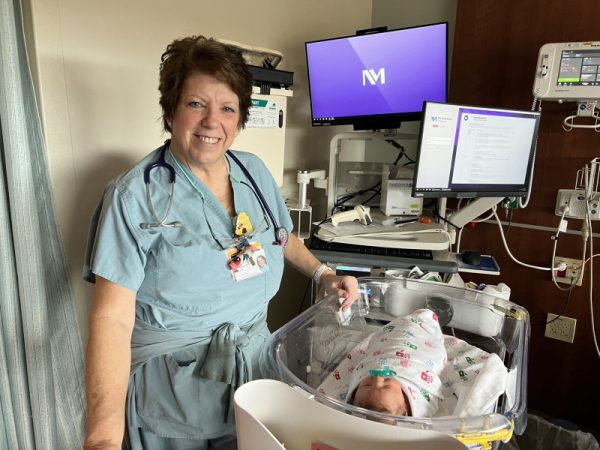
Just three days later, the call came in. A heart was ready.
“It was 11 p.m. and I had just worked a 12-hour shift. All three of my adult children tested positive for COVID-19, so I drove myself to Northwestern Memorial Hospital,” said Polizzi. “I walked into the ER with my bags announcing I was ready for my transplant.”
The surgery was a success. Polizzi was out of the hospital just ten days later. Motivated to get her life back, Polizzi focused on her recovery completing cardiac rehabilitation. In about five months, she was back at work.
“Nancy’s strength and desire to help others is truly an inspiration,” said Katie Martin, MSN, RNC-OB, clinical director of Labor and Delivery at Northwestern Medicine Central DuPage Hospital. “Her and I have reflected on the words she lives by ‘whisper words of wisdom, let it be’. Through the challenging days, she always finds a way to stay positive, face the day and move ahead.”
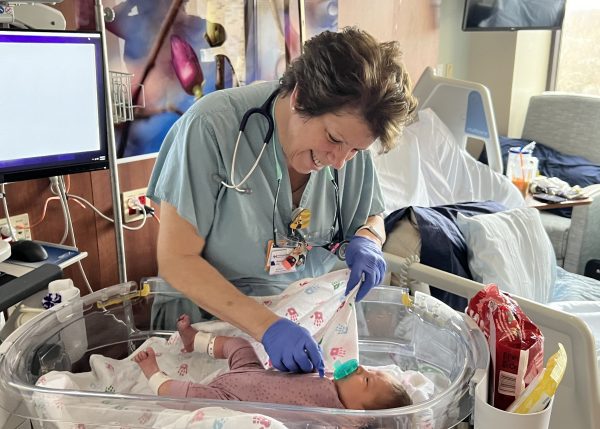
Polizzi is now an advocate for heart health. She wears red, sports heart pins, posts heart healthy information on social media and reminds everyone to get their lab work done, keep the diet going, and stay with it.
“My friends call me the Energizer Bunny,” said Polizzi. “I’m back to traveling, riding my bike, working, enjoying life. Most importantly the heart transplant blessed me with more time to celebrate my son’s wedding and the birth of more grandchildren.”

Enfermera de partos y partos supera el cáncer y la insuficiencia cardíaca
Mientras Nancy Polizzi ayuda a traer nueva vida a este mundo en el Hospital Central DuPage de Northwestern Medicine, reflexiona sobre lo afortunada que es de estar viva. La enfermera de partos y partos de Montgomery ha sobrevivido no solo a una, sino a dos enfermedades potencialmente mortales, manteniendo una actitud positiva y contagiando alegría a quienes la rodean.
Una década después del tratamiento por cáncer de mama, Polizzi comenzó a experimentar dificultad para respirar. Su ventrículo izquierdo estaba dañado, posiblemente a causa de la quimioterapia, y padecía insuficiencia cardíaca congestiva temprana. Los medicamentos ayudaron con los síntomas pero no pudieron corregir la causa subyacente. Era hora de empezar a pensar en tratamientos más agresivos llamados terapias avanzadas para la insuficiencia cardíaca.
“Entré en shock. Trabajaba a tiempo completo y pensaba que estaba bien, pero los laboratorios mostraban una historia diferente”, dijo Polizzi. “Estaba en negación y superando la fatiga”.
La evaluación de Polizzi reveló que su mejor opción era un dispositivo de asistencia ventricular izquierda (DAVI), con la esperanza de que pudiera ser un puente hacia el trasplante. El DAVI es una bomba cardíaca mecánica implantada quirúrgicamente que ayuda al corazón a bombear sangre por todo el cuerpo.
“El DAVI fue mi momento decisivo. Fue cuando acepté que necesitaba algo más”, dijo Polizzi. “El DAVI me hizo sentir mejor. De hecho, me sentí tan bien que metí los cables del DAVI, el controlador y las baterías en un chaleco y volví a trabajar”.
Un año después, llegó el momento de ser agregado a la lista de trasplantes de corazón. La cuenta atrás había comenzado.
“El DAVI trató la insuficiencia cardíaca subyacente de Nancy y al mismo tiempo mejoró una afección llamada hipertensión pulmonar”, dijo Anjan Tibrewala, MD, especialista en insuficiencia cardíaca y trasplante de corazón en el Instituto Cardiovascular Bluhm de Northwestern Medicine. “Basándonos en los resultados de estas pruebas, sabíamos que probablemente se beneficiaría de un trasplante de corazón”.
Nancy Polizzi, sobreviviente de cáncer y trasplante de corazón, trabaja como enfermera de partos en el Hospital Central DuPage de Northwestern Medicine.
Apenas tres días después, llegó la llamada. Había un corazón listo.
“Eran las 11 de la noche. y acababa de trabajar un turno de 12 horas. Mis tres hijos adultos dieron positivo por COVID-19, así que conduje hasta el Northwestern Memorial Hospital”, dijo Polizzi. “Entré a emergencias con mis maletas anunciando que estaba listo para mi trasplante”.
La cirugía fue un éxito. Polizzi salió del hospital apenas diez días después. Motivada por recuperar su vida, Polizzi se centró en su recuperación completando la rehabilitación cardíaca. Al cabo de unos cinco meses volvió a trabajar.
“La fuerza y el deseo de Nancy de ayudar a los demás son verdaderamente una inspiración”, dijo Katie Martin, MSN, RNC-OB, directora clínica de Trabajo de parto y parto en Northwestern Medicine Central DuPage Hospital. “Ella y yo hemos reflexionado sobre las palabras que ella vive con ‘susurrar palabras de sabiduría, déjalo ser’. A través de los días difíciles, ella siempre encuentra una manera de mantener una actitud positiva, afrontar el día y seguir adelante”.
Nancy Polizzi, sobreviviente de cáncer y trasplante de corazón, envuelve a un bebé en el Hospital Central DuPage de Northwestern Medicine
Polizzi es ahora un defensor de la salud del corazón. Lleva prendedores rojos con forma de corazón, publica información sobre salud cardíaca en las redes sociales y les recuerda a todos que deben hacerse sus análisis de laboratorio, mantener la dieta y seguirla.
“Mis amigos me llaman el Conejito Energizer”, dijo Polizzi. “He vuelto a viajar, andar en bicicleta, trabajar, disfrutar la vida. Lo más importante es que el trasplante de corazón me bendijo con más tiempo para celebrar la boda de mi hijo y el nacimiento de más nietos”.