In small hometown of West Chicago transparency has become a mounting concern. A recent ethics complaint filed against former Mayor Ruben Pineda is raising serious questions—not just about one man’s conduct, but about a system seemingly designed to avoid accountability.
The issue centers around a familiar political play: a public official leveraging the resources of their office to bolster their campaign. But in this case, watchdog Edgar Pal says the violations are clear—and the city’s refusal to address them may now force legal action.
The Complaint
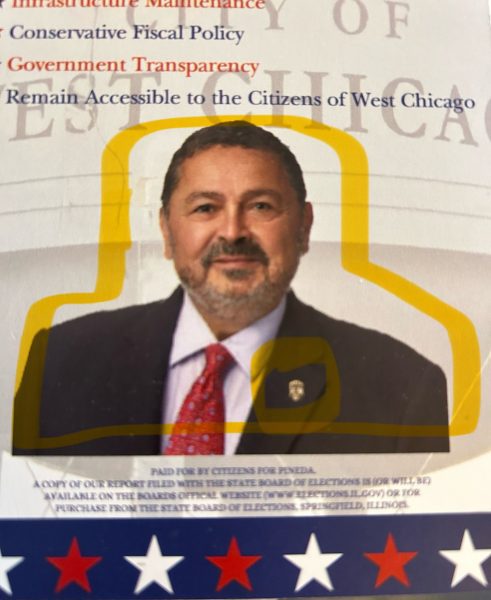
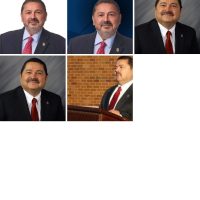
You’ve seen this headshot before—it appeared on the city’s official website, in ‘Coffee with the Mayor’ posts, social media, and throughout the web. The City of WC hired a professional photographer to take this photo- and they paid for it with your tax dollars.
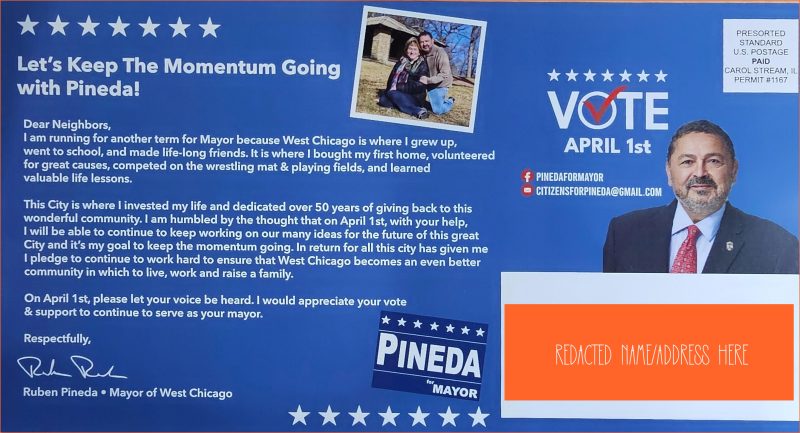
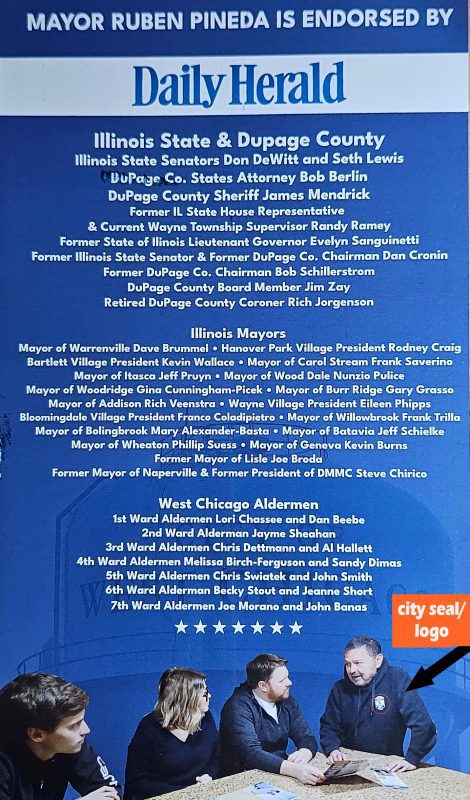
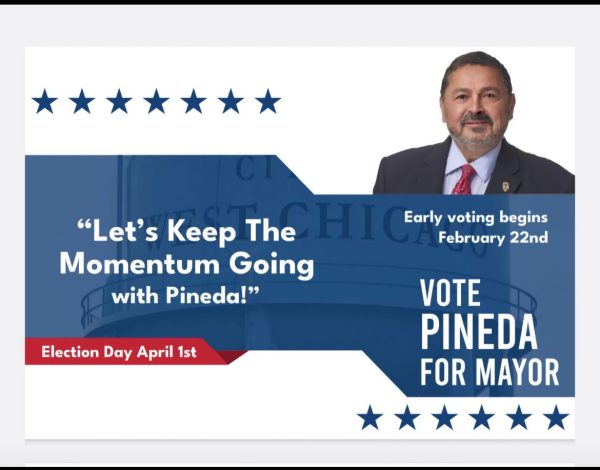
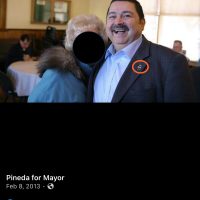
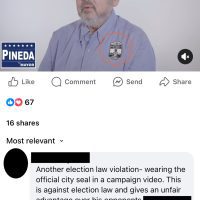
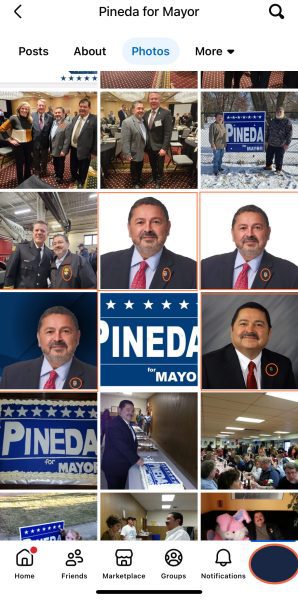
During his reelection campaign earlier this year, Pineda widely used a professional headshot taken and paid for by the City of West Chicago. The image was featured prominently on his campaign postcards, door hangers, and his social media posts. The problem? That headshot was captured by a photographer hired and paid for by the city—making it an official government resource. Additionally, photos on election material mailers, and on the campaign’s social media pages repeatedly showed Pineda wearing lapel pins featuring the city seal,(logo) and standing in official city settings, blurring the line between public office and personal ambition.
Pal, a well-known government accountability advocate with a track record of successful ethics cases in towns like Elmhurst, submitted a series of FOIA requests to determine whether taxpayer dollars were involved. They were. The headshot, he confirmed, was part of a photoshoot arranged and paid for by the city. The photographer of record? John Tulipano (D.B.A.-JLT Photography)—a familiar name in city circles.
Many argued at the time this gave Pineda an unfair advantage over his opponents—using city-funded imagery that exuded legitimacy and trust to bolster a political campaign. Such use, according to Pal, violates both West Chicago’s ethics code and applicable sections of the Illinois Election Code. A copy of the city’s code and citations from state law support his claim.(click to view)
Ruben Pineda’s use of his official city head shot on campaign materials distributed through the mail during election season
More Examples
The City’s Response: Pass the Buck
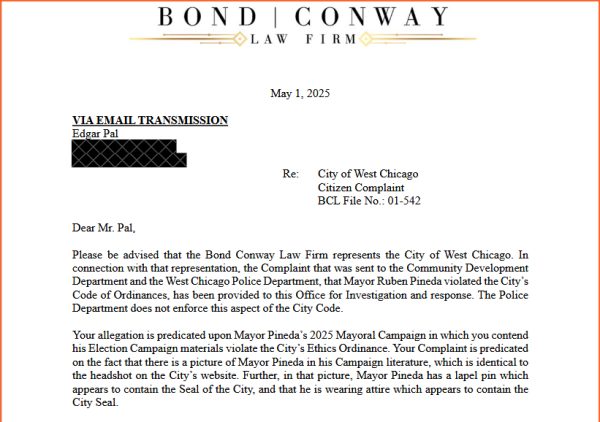
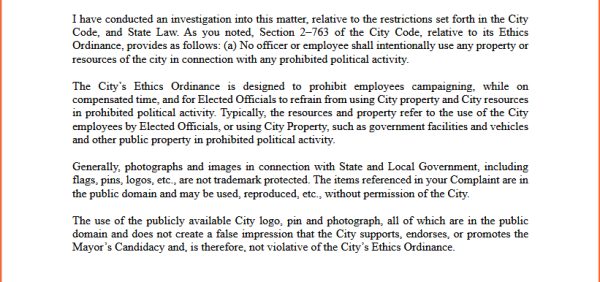
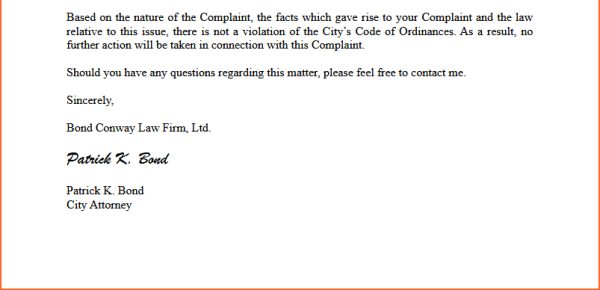
Pal wasn’t rushing to court. He followed the proper channels. He attempted to report the violation to various city officials, only to be met with silence—or deflection. He contacted the police chief, code enforcement officials and others and eventually, the issue was routed to Pat Bond, who acted as corporate counsel for the City of West Chicago. Bond, rather than conducting an independent review, issued a formal response defending Pineda and stating that no ethics violation had occurred. In an interview with The West Chicago Voice, Pal called Bond’s decision a “deal-breaker.”
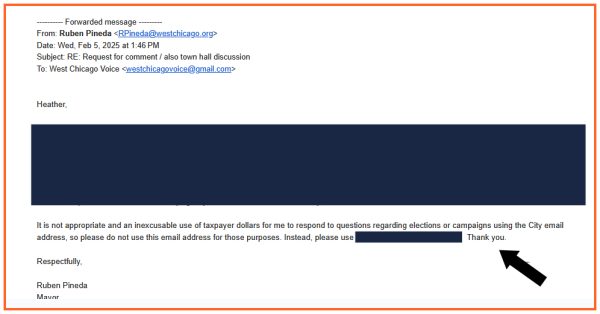
Pineda clearly knew the rules. During the campaign, Pineda sent an email to The West Chicago Voice stating,
“It is not appropriate and an inexcusable use of taxpayer dollars for me to respond to questions regarding elections or campaigns using the City email address, so please do not use this email address for those purposes. Instead, please use xxxxxxxxxx@gmail.com”
-Ruben Pineda’s Email To The West Chicago Voice, Clearly Showing He Knew City Resources Were Not To Be Used For Campaigning/Elections
That statement, in his own words, raises a critical question: If he understood that city resources can’t be used for campaigning, how does he justify using a city-paid headshot and other official materials to promote his re-election?
During the election, several residents left comments on Ruben Pineda’s campaign Facebook page, pointing out that his use of the official city headshot—and multiple photos showing him wearing the city seal—appeared to violate ethics rules prohibiting the use of government resources for political purposes. Those comments were later removed from the page, allegedly deleted by either Pineda himself or Alderman Joseph Morano, who served as an administrator for the campaign Facebook account. Since the election, the entire campaign page appears to have been deleted.
Red Flags and a Closed Case
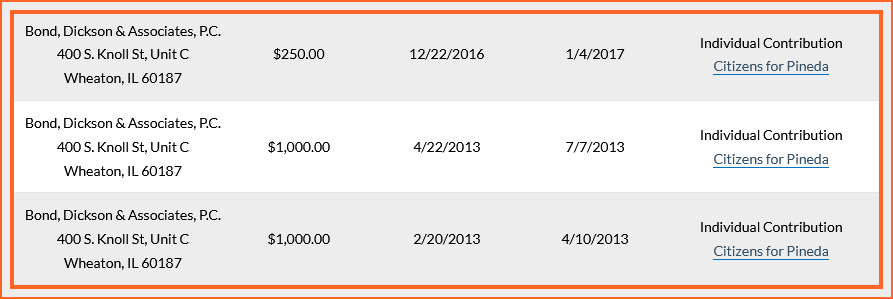
After watchdog Edgar Pal filed the ethics complaint alleging former Mayor Ruben Pineda misused taxpayer-funded images and appeared in campaign materials wearing the official West Chicago City Seal, then City Attorney Patrick Bond dismissed the concern. He claimed the headshot and insignia were in the public domain and that their use didn’t constitute a violation of the city’s Ethics Ordinance. It was then that Pal began digging deeper, and he discovered three donations to Pineda’s previous Mayoral campaigns in 2013 and 2016. The three donations totalled $2500.
$2500 in donations from Bond’s Law Firm to Ruben Pineda’s Campaign 2/20/2013, 4/22/2013, and 12/22/2016
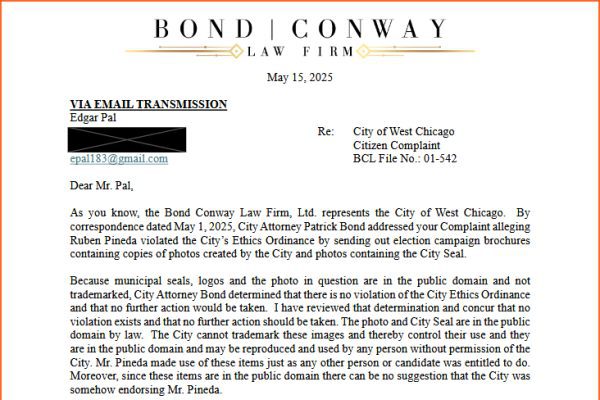
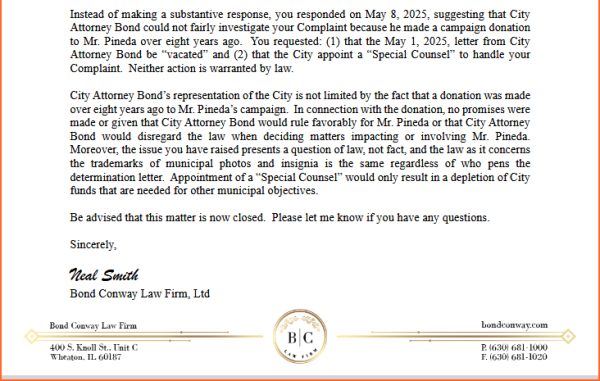
Citing these donations, Pal clapped back at Bond, suggesting a possible conflict of interest— he requested a neutral special counsel be appointed to oversee the matter— However, instead of receiving a reply from a neutral or independent attorney in the matter, Bond’s colleague at the same firm, Neal Smith, issued a follow-up response doubling-down on the decision not to investigate further.
In response to the letter from Neal Smith, watchdog Edgar Pal fired back with a sharp rebuttal. In an email sent directly to Smith, Pal challenged the credibility of the firm’s involvement and again requested the appointment of independent special counsel.
“It’s disingenuous of you to state with such conviction that you’re representing the City on this ethics matter, when the current Mayor appears to be trying to remove your law firm as Corporation Counsel,” Pal wrote. He went on to note that Bond’s firm had donated over $2,000 to Pineda’s campaign—making the firm the sixth highest overall donor to Pineda’s previous campaign(s) fund. “You clearly have a financial interest in Mayor Pineda’s campaign,” Pal stated, reinforcing his call for an unbiased review.
Pal also directly disputed the city’s claim that the images were “publicly available” or “not proprietary.” He pointed out that the City of West Chicago’s entire website is protected by copyright, citing the “All rights reserved” footer and language from the city’s own terms of use which prohibits commercial use of materials without written permission. Furthermore, the invoice from JLT Photography obtained through Pal’s FOIA request clearly outlines that the license for Pineda’s headshot was limited in scope, allowing use only for “website, newsletter, and promotional flyers”—not campaign materials. Pal’s response undercut the legal basis of Bond and Smith’s position and added new weight to the demand for outside review.
What makes Smith’s response even more problematic is the timeline: Mayor Daniel Bovey officially removed Pat Bond and his law firm as corporate counsel on May 5, 2025 moments after his official swearing in—a full ten days before Neal Smith issued his letter to Pal. At that point, Jeff Jacobsen had already been appointed as interim corporate counsel. Despite this, Smith responded on behalf of the city, even though his firm no longer held that role. This raises serious procedural concerns about the legitimacy and authority of the response—and reinforces Pal’s argument that the complaint was not handled appropriately or independently.
Notably, neither attorney addressed a key issue: the fact that the headshot was created using public funds and intended for official government use, not electioneering, nor did they address the use of City seal/logo in scores of photos on Pineda’s campaign Facebook page.
Why is Pineda wearing the City Seal/Logo In Election Materials A Problem?
In addition to the headshots (from multiple years), dozens of campaign-related photos showed Pineda wearing either a lapel pin or embroidered clothing featuring the official West Chicago city seal—an insignia that visually reinforces his authority as an elected official. These images were not isolated incidents; rather, they formed a pattern of repeated use across years of campaign posts on his Facebook page. While the page has since been deleted, screenshots collected beforehand reveal a long-standing practice of using official imagery to bolster his political brand. The frequency and consistency of these violations suggest not an oversight, but a deliberate disregard for ethical boundaries.
This isn’t just an ethical gray area; it may be a direct violation of Illinois law. Under the Local Governmental Employees Political Rights Act (50 ILCS 135/10), subsection (b) states:
“No employee of a unit of local government … may (i) use his or her official position of employment to coerce or inhibit others in the free exercise of their political rights or (ii) engage in political activities while at work or on duty.”
The law is clear: public employees may not use their official status (i.e., Role as Mayor) or any part of their government role to bolster political campaigns. Wearing a city-issued lapel pin or jacket adorned with the official West Chicago seal while promoting re-election is not a neutral act—it leverages the authority and image of the city for personal political gain.
While Bond attempted to frame the images as generic and publicly accessible, he failed to consider the deeper implication: the use of official municipal imagery—especially when paid for by taxpayers and worn by the candidate—visually conveys legitimacy, authority, and incumbency in a way that can mislead voters and undercut electoral fairness.
That concern goes beyond policy optics. It’s a fundamental principle of state law designed to prevent exactly this kind of conflation between public service and political self-promotion.
Lack of Accountability Raises Further Concerns
Despite multiple requests for comment, neither City Attorney Patrick Bond nor then-Mayor Ruben Pineda responded to questions regarding the campaign mailers. The West Chicago Voice reached out twice to Mayor Pineda and contacted Bond’s law firm directly, but no replies were received.
On April 23 — before Mayor Dan Bovey officially took office, [former] City Administrator Michael Guttman did respond via email to the West Chicago Voice requesting comment about this matter —he stated:
“The City of West Chicago has no jurisdiction over enforcement of the Election Code and City staff have no authority to initiate investigations into the conduct of elected officials.”
However, a Freedom of Information Act (FOIA) request filed by Pal with the city of West Chicago’s FOIA officer, Valeria Perez confirmed that the official headshot used repeatedly in Pineda’s campaign materials was, in fact produced as part of official city business and had been used on the city’s website and communications. Its reuse for campaign purposes raises clear ethical concerns under local and state law.
Guttman’s reply failed to acknowledge this fact, instead sidestepping the central issue. The silence from both Bond and Pineda, coupled with the lack of action from city staff, leaves many residents questioning who, if anyone, is responsible for upholding the city’s ethical standards.
Still Waiting for Accountability
According to Pal, after raising concerns about Bond’s conflict of interest and requesting an independent review, he was told by interim corporate counsel Jeff Jacobsen that the city intended to appoint a new permanent corporate counsel firm soon — and that once that was done, the ethics complaint would be revisited.
The Voice reached out to Mr. Jacobsen for comment, but he did not respond.While West Chicago has e xperienced a period of transition — with the recent election of a new mayor and new city council members — the ethical complaint was filed well before that. Residents and watchdogs alike argue that the matter should have been addressed in a timely manner rather than kicked down the road. For many, the handling of the complaint is just more of the same from the powers that be — and the powers that were.
The use of taxpayer-funded resources for political gain, the refusal to prosecute clear violations of city code, and the troubling lack of transparency from officials continues to raise serious questions about the integrity of governance in West Chicago.
At its core, this story isn’t just about a campaign photo or wearing a city seal or logo — it’s about the erosion of public trust and the failure of systems meant to uphold accountability. As residents await meaningful action, one truth remains: ethical standards are only as strong as those willing to enforce them. And so far, West Chicago has fallen short.
¿Reglas para ti, no para mí? Un análisis profundo sobre la ética, el silencio y la lucha de un vigilante por la rendición de cuentas en West Chicago
Por el equipo de The West Chicago Voice
En una ciudad pequeña donde la transparencia se ha convertido en una preocupación creciente, una reciente denuncia ética presentada contra el exalcalde Ruben Pineda está generando serias preguntas—no solo sobre la conducta de un hombre, sino sobre un sistema que parece estar diseñado para evitar la rendición de cuentas.
El problema gira en torno a una táctica política familiar: un funcionario público que aprovecha los recursos de su cargo para fortalecer su campaña. Pero en este caso, el vigilante Edgar Pal dice que las violaciones son claras—y la negativa de la ciudad a abordarlas podría ahora forzar acciones legales.
La Denuncia
Probablemente ya haya visto este retrato oficial—apareció en el sitio web de la ciudad, en publicaciones de “Coffee with the Mayor”, redes sociales y en otras plataformas. La Ciudad de West Chicago contrató a un fotógrafo profesional para tomar esta foto—y la pagó con sus impuestos.
Durante su campaña de reelección a principios de este año, Pineda utilizó ampliamente un retrato profesional tomado y pagado por la Ciudad de West Chicago. La imagen apareció de manera destacada en sus postales de campaña, volantes y anuncios en redes sociales. ¿El problema? Esa foto fue tomada por un fotógrafo contratado y pagado por la ciudad—convirtiéndola en un recurso oficial del gobierno. Además, en materiales electorales y publicaciones de redes sociales de la campaña, Pineda aparece repetidamente usando pines de solapa con el sello de la ciudad y en entornos oficiales, difuminando la línea entre su cargo público y su ambición personal.
Pal, un defensor del gobierno transparente con historial de denuncias exitosas en ciudades como Elmhurst, presentó una serie de solicitudes FOIA para determinar si se usaron fondos públicos. Y así fue. Confirmó que la foto fue parte de una sesión fotográfica organizada y pagada por la ciudad. ¿El fotógrafo? John Tulipano—un nombre conocido en los círculos municipales.
Muchos argumentaron que esto le dio a Pineda una ventaja injusta sobre sus oponentes—utilizando imágenes financiadas por la ciudad que transmiten legitimidad y confianza para impulsar su campaña política. Según Pal, ese uso viola tanto el código ético de West Chicago como secciones aplicables del Código Electoral de Illinois. Copias del código municipal y citas de la ley estatal respaldan su afirmación.
Uso del retrato oficial de Pineda en materiales enviados por correo durante la temporada electoral
Respuesta de la Ciudad: Echar la Pelota
Pal no se apresuró a ir a los tribunales. Siguió los canales adecuados. Intentó reportar la violación a varios funcionarios municipales, pero se encontró con silencio—o evasivas.
Eventualmente, el asunto fue dirigido a Pat Bond, quien se desempeñaba como abogado corporativo de la Ciudad de West Chicago. Bond, en lugar de realizar una revisión independiente, emitió una respuesta formal defendiendo a Pineda y afirmando que no hubo violación ética. En una entrevista con The West Chicago Voice, Pal calificó la decisión de Bond como un “punto de quiebre”.
Pineda claramente conocía las reglas. Durante la campaña, Pineda envió un correo a The West Chicago Voice diciendo:
“No es apropiado y constituye un uso inexcusable de los fondos públicos que yo responda a preguntas sobre elecciones o campañas usando el correo electrónico de la ciudad, así que por favor no usen este correo para esos fines. En su lugar, utilicen xxxxxxxxxx@gmail.com”
-Este correo de Ruben Pineda demuestra que él sabía que los recursos municipales no debían usarse para campañas
Esa declaración plantea una pregunta crítica: si entendía que no podía usar recursos municipales para hacer campaña, ¿cómo justifica el uso de una foto pagada por la ciudad y otros materiales oficiales para promover su reelección?
Durante las elecciones, varios residentes comentaron en la página de campaña de Pineda en Facebook, señalando que el uso de la foto oficial y otras imágenes con el sello de la ciudad parecían violar las reglas éticas. Esos comentarios fueron eliminados, presuntamente por Pineda o por el concejal Joseph Morano, quien era administrador de la página. Desde entonces, la página entera de la campaña ha sido eliminada.
Señales de Alerta y Caso Cerrado
Tras la denuncia ética presentada por Pal, en la que alega que Pineda usó imágenes pagadas por los contribuyentes y apareció con el sello oficial en materiales de campaña, el entonces abogado municipal Patrick Bond desestimó la preocupación. Alegó que la imagen y los símbolos eran de dominio público y que su uso no violaba el Código Ético de la ciudad. Fue entonces cuando Pal investigó más a fondo y descubrió tres donaciones a campañas anteriores de Pineda en 2013 y 2016, por un total de $2500 dólares.
Citando estas donaciones, Pal cuestionó la imparcialidad de Bond y solicitó un abogado especial neutral. En lugar de recibir respuesta de alguien independiente, otro abogado del mismo despacho, Neal Smith, respondió reafirmando que no se investigaría más.
En su respuesta, Pal criticó duramente a Smith, señalando que la firma Neal & Leroy había donado más de $2,000 a campañas anteriores de Pineda, convirtiéndose en uno de los donantes más grandes. “Ustedes tienen un interés financiero en la campaña del alcalde Pineda,” escribió Pal, reiterando su solicitud de una revisión imparcial.
Pal también refutó el argumento de que las imágenes eran públicas. Señaló que todo el sitio web de la ciudad está protegido por derechos de autor, lo que se indica en el pie de página y en los términos de uso. Además, la factura del fotógrafo John Tulipano especificaba que la licencia de uso era limitada y solo para “sitio web, boletines y folletos promocionales”—no para materiales de campaña.
Lo que hace aún más cuestionable la respuesta de Smith es la fecha: el nuevo alcalde, Daniel Bovey, removió oficialmente a Bond y a su firma como abogados de la ciudad el 5 de mayo de 2025, diez días antes de que Smith emitiera su carta. Para entonces, Jeff Jacobsen ya había sido nombrado asesor legal interino. Aun así, Smith respondió en nombre de la ciudad, aunque su firma ya no tenía autoridad legal para hacerlo. Esto plantea serias preocupaciones sobre la legitimidad del proceso.
Y ninguno de los abogados abordó el hecho clave: que la imagen fue financiada con dinero público y destinada al uso gubernamental, no a campañas.
¿Por qué es un problema que Pineda usara el sello de la ciudad en campaña?
Además de los retratos oficiales (de varios años), docenas de imágenes de campaña mostraban a Pineda usando un pin de solapa o ropa bordada con el sello de West Chicago—símbolos que refuerzan visualmente su autoridad como funcionario electo. Estas no fueron incidentes aislados; formaron un patrón consistente a lo largo de años. Aunque la página ha sido eliminada, capturas de pantalla documentan esta práctica.
Esto podría constituir una violación directa a la ley de Illinois. Según la Ley de Derechos Políticos de Empleados Gubernamentales (50 ILCS 135/10), sección (b):
“Ningún empleado de una unidad del gobierno local… podrá (i) usar su cargo oficial para coaccionar o inhibir a otros en el ejercicio de sus derechos políticos o (ii) participar en actividades políticas durante su jornada laboral.”
La ley es clara: los empleados públicos no pueden usar su rol oficial ni ningún símbolo del gobierno para campañas políticas. Usar un pin con el sello de la ciudad durante una campaña no es un acto neutral—transmite autoridad e influencia institucional.
Bond intentó presentar las imágenes como genéricas, pero ignoró el punto central: el uso de símbolos oficiales financiados por los contribuyentes otorga legitimidad e incumbencia, engañando a los votantes y socavando la equidad electoral.
Falta de Responsabilidad Aumenta las Preocupaciones
A pesar de múltiples solicitudes de comentarios, ni Patrick Bond ni Ruben Pineda respondieron preguntas sobre los materiales de campaña. The West Chicago Voice contactó dos veces a Pineda y a la firma de Bond sin recibir respuesta.
El 23 de abril—antes de que Dan Bovey asumiera como alcalde—el entonces administrador de la ciudad, Michael Guttman, respondió por correo electrónico afirmando:
“La Ciudad de West Chicago no tiene jurisdicción sobre la aplicación del Código Electoral y el personal no tiene autoridad para iniciar investigaciones sobre funcionarios electos.”
Sin embargo, una solicitud FOIA presentada por Pal confirmó que el retrato oficial fue producido como parte del trabajo municipal, y su reutilización para fines de campaña plantea preocupaciones éticas claras bajo la ley local y estatal.
La respuesta de Guttman eludió este punto central, y el silencio de Bond y Pineda deja a muchos residentes preguntándose quién hace cumplir las reglas.
Aún Esperando Responsabilidad
Según Pal, después de plantear la preocupación sobre el conflicto de interés de Bond y pedir una revisión independiente, se le informó que el nuevo asesor legal permanente sería designado pronto y que su denuncia sería reconsiderada.
The Voice contactó a Jeff Jacobsen para comentarios, pero no respondió. Si bien West Chicago ha pasado por una transición, la denuncia fue presentada antes de ese proceso. Para muchos, la forma en que se manejó representa más de lo mismo por parte de las autoridades anteriores y actuales.
El uso de recursos pagados con impuestos para campañas, la negativa a aplicar el código de ética municipal y la falta de transparencia siguen generando dudas sobre la integridad del gobierno local.
En el fondo, esta historia no se trata solo de una foto o un logo—se trata de la erosión de la confianza pública y del fracaso de los sistemas diseñados para garantizar la rendición de cuentas. Mientras los residentes esperan acción concreta, una verdad es clara: los estándares éticos solo son tan fuertes como quienes están dispuestos a hacerlos cumplir. Y hasta ahora, West Chicago ha quedado en deuda.